Horse & Rider


Sol Plus Equine: oral support for horse sunburn and sun management
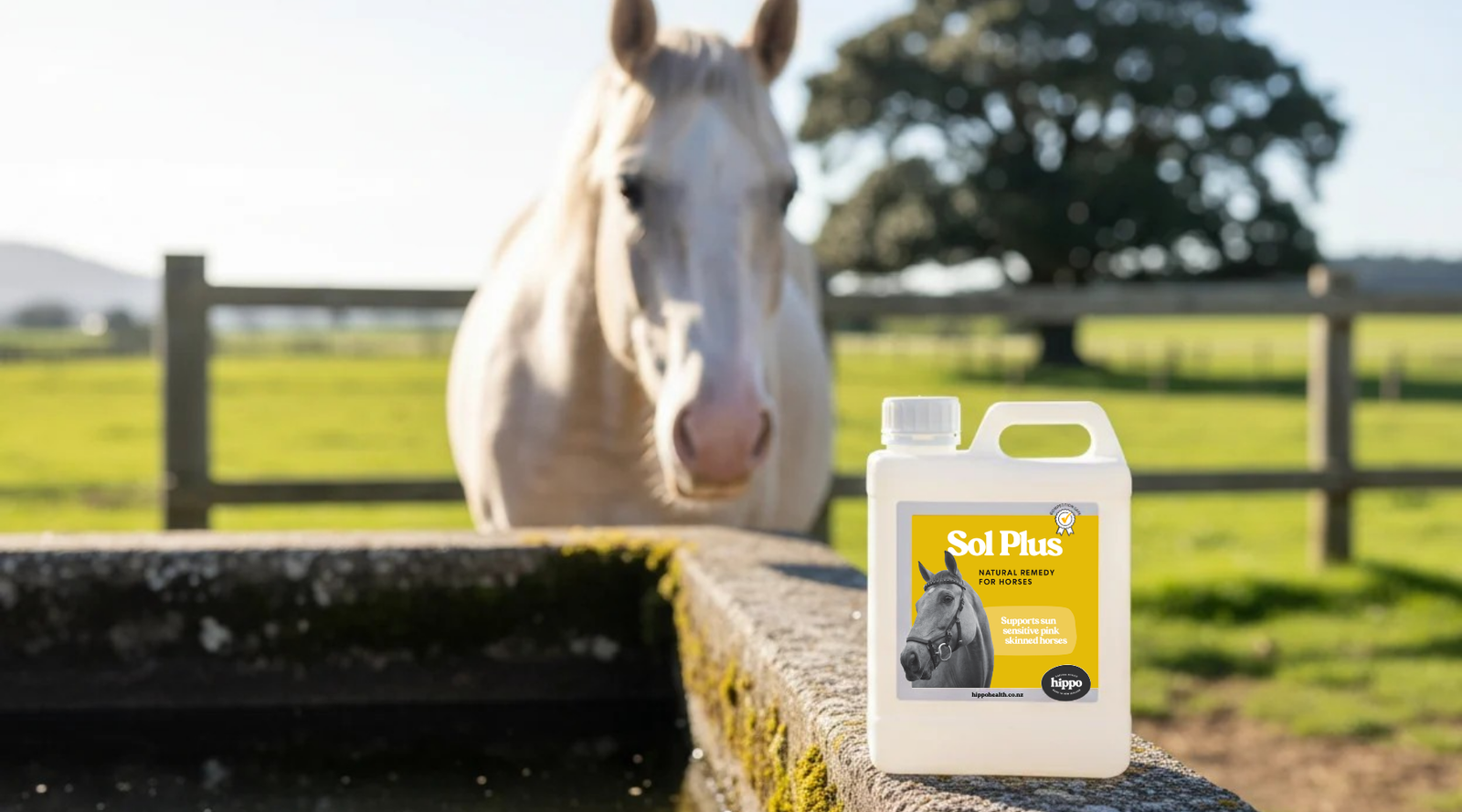

Putting horse sunscreen or sunblock for horses on a pink nose makes intuitive sense. Adding an oral remedy to your horse sun protection routine can take a little more explaining.
Sol Plus Equine is an oral remedy formulated to support a normal immune response to sun exposure in horses that are prone to horse sunburn. It can be used preventatively before stronger summer sun arrives or introduced when signs of sun damage first appear.
Key Highlights
- Sol Plus Equine is an oral remedy formulated to support horses that burn easily.
- Sol Plus Equine can sit alongside other horse sun protection measures such as shade, UV masks, turnout management and topical sunblock for horses.
- For preventative use, we recommend starting Sol Plus Equine in spring and allowing around 7–10 days for the remedy to take effect.
- It is not a horse sunscreen, sunblock or SPF-rated product and does not physically block ultraviolet radiation.
- Sol Plus Equine can be added to the water trough, making it practical for dosing multiple horses at once. During summer, trough dosing is required only every second day.
- Hippo Health oral remedies only need to make contact with a mucous membrane such as the lips, tongue or gums for the ingredients to activate.
- Zinc is found in many horse sunscreens and sunblocks. Hippo Health advises that topical zinc can interfere with the performance of its homeopathic remedies, so check the ingredients of topical products being used alongside Sol Plus Equine.
- Severe or unusual reactions to sunlight may be caused by photosensitivity rather than ordinary horse sunburn and should be investigated.
What is Sol Plus Equine?
Sol Plus Equine is an oral remedy formulated for pink-skinned horses and others that burn easily.
Unlike a topical horse sunscreen or sunblock for horses, Sol Plus Equine isn't applied to vulnerable pink skin. Instead, it is administered orally to support a normal immune response to sun exposure. That means no cream to apply to the skin because Sol Plus Equine can simply be added to the trough, feed or dosed directly.
That can make it a practical addition to horse sun protection routines where repeatedly applying creams or keeping nose covers in place becomes difficult.
Importantly, Sol Plus Equine is not a sunscreen, sunblock or SPF-rated product and does not physically block UV radiation. It is designed to be used as part of a wider sun-management routine appropriate for your horse.
Depending on the individual horse, sun management may still include shade, altered turnout, UV masks or nose covers and appropriate topical sun protection.
Read more about managing sun exposure for your horse in this practical guide to horse sun protection.
How can an oral remedy be used for sun management?
This is one of the first questions people ask about Sol Plus Equine.
Hippo Health remedies are administered orally and only need to make contact with a mucous membrane such as the horse's lips, gums or tongue. They don't need to be swallowed, and our dosing guidance places greater importance on dosing frequency than on the volume consumed.
That’s why we usually recommend trough dosing, as your horse will get a top-up dose of remedy every time they take a drink. It’s also an efficient and cost-effective way of dosing multiple horses who drink from the same trough.
In addition to dosing through the water trough, Sol Plus Equine can also be given on feed, on a treat, or dosed directly into the mouth.
For a more detailed explanation about using oral remedies, read How do oral remedies for horses work?.

Sol Plus Equine customer Tracey shares her experience using the remedy for her pink-nosed palomino after struggling with recurring sunburn and muzzle blisters.
When should I start using Sol Plus Equine?
For horses that burn easily, we recommend starting Sol Plus Equine in spring before stronger summer UV arrives, allowing 7-10 days for the remedy to take effect.
During this initial period, continue with your horse's usual sun-management measures and monitor exposed pink skin rather than assuming the remedy has taken effect immediately.
Sol Plus Equine can also be introduced after signs of sun damage appear, but horses with severe, painful or unusual skin reactions should be assessed by a veterinarian rather than assuming ordinary sunburn is the cause.
Sol Plus Equine timing at a glance
|
Situation |
Suggested approach |
|
Horse is known to be susceptible to sun damage |
Start dosing in spring and allow around 7–10 days for it to take effect |
|
Starting Sol Plus Equine during summer |
Begin dosing and continue your usual physical sun-management routine while the remedy takes effect |
|
Using trough dosing through summer |
Dose every second day |
|
Winter / low-risk months |
Regular dosing is generally not required unless there is an individual reason to continue |
|
Severe or unusual reaction to sunlight |
Reduce sun exposure and seek veterinary advice to rule out photosensitivity or another underlying cause |
How do I dose Sol Plus Equine through the water trough?
Trough dosing is one of Sol Plus Equine's biggest practical advantages, particularly for owners managing several horses.
Rather than applying sunscreen individually each day, Sol Plus Equine can be added to a shared water trough, and trough dosing is required only every second day during summer.
Multiple animals can share a trough when remedies such as Sol Plus Equine are being used, although owners at shared grazing facilities should check with the facility manager before adding anything to communal water.
Sol Plus Equine is available in jerry can format for trough and feed dosing, and pump bottle format for direct dosing. There is a difference in the formulation of these two formats, so read this article on pump bottle vs jerry can remedies to see which is right for you.

Mikayla H found Sol Plus Equine effective and easy to use by dosing her water trough and now uses it as a preventative for any horse with pink skin.
Do I still need horse sunscreen when using Sol Plus Equine?
Potentially, yes. If your horse normally needs sunscreen on its nose or muzzle, Sol Plus Equine should be an addition to your management routine, rather than a replacement.
Some horses may still benefit from physical sun-management measures such as:
- shade during periods of strong UV
- a UV mask or extended nose cover
- altered turnout times
- topical horse sunscreen or sunblock on vulnerable areas
The amount of additional management required will depend on the individual horse and how prone it is to sun damage.
When first starting Sol Plus Equine, continue your existing sun-management routine for around a week while allowing the remedy time to take effect. Then continue to observe your horse's skin and adjust management according to its individual response.
For more detail on sunscreen, shade, masks and managing UV exposure, read our guide to horse sunburn and horse sun protection.
Check your sunscreen for zinc when using Sol Plus Equine
This is an important one if you're combining Sol Plus Equine with topical horse sunscreen or sunblock.
Zinc is a common ingredient in sunscreens, sunblocks and skin ointments and can interfere with the efficacy of homeopathic remedies like Sol Plus Equine. This does not mean that zinc and Sol Plus Equine create a harmful interaction. The concern is that using a zinc-based topical product at the same time may reduce how well the remedy performs.
Before combining Sol Plus Equine with an existing sunscreen:
- Check the ingredient list to see whether the product contains zinc.
- If you're using a zinc-based sunblock and aren't getting the expected results from Sol Plus Equine, consider whether the two products could be working against each other.
- Read our full guide to what can make Hippo Health remedies less effective.
The same article also explains other factors that may affect remedy performance, including strong essential oils and exposure of the remedy itself to excessive heat or direct sunlight.
How should I store Sol Plus Equine during summer?
Summer is exactly when Sol Plus Equine is most likely to be sitting around a feed room, tack shed or vehicle,and also when storage conditions matter.
Our remedies should be kept somewhere cool and out of direct sunlight. Exposure to temperatures above 30°C or prolonged direct sun can reduce the effectiveness of the active ingredients.
Avoid leaving the container:
- in direct sunlight
- in a hot vehicle
- in an excessively hot tack or feed room
Sol Plus Equine has a two-year shelf life when correctly stored, so a container from the previous summer may still be suitable for the new season. Check the use-by date and that it has been stored appropriately before using it again.
Is every reaction to sunlight ordinary horse sunburn?
No. A horse that develops an unusually severe or sudden reaction to sunlight may be experiencing photosensitivity, which is different from straightforward UV sunburn.
Sunburn is caused by direct ultraviolet exposure. Photosensitivity involves substances within the horse's body that make the skin abnormally reactive to sunlight. It can be associated with factors including lush pasture, algae-contaminated water and impaired liver function.
Signs that deserve closer investigation include:
- significant swelling
- blistering or weeping
- marked discomfort in sunlight
- unexpectedly severe skin damage
- repeated problems despite normal sun-management measures
If this sounds more like what you're seeing, read Does my horse have Mud Fever/Greasy Heel or Photosensitivity – or is it sunburn?
If you're unsure what you're dealing with, particularly where the horse appears painful or unwell, contact your veterinarian.
Sol Plus Equine FAQs
Is Sol Plus Equine a horse sunscreen or sunblock?
No. Sol Plus Equine is not a sunscreen, sunblock or SPF-rated product. It is an oral remedy formulated to support a normal immune response to sun exposure in horses prone to sunburn.
Topical sunscreen, physical barriers and other sun-management measures may still be appropriate depending on the horse.
Will the effects of Sol Plus Equine be instant?
No. We recommend allowing approximately 7–10 days for Sol Plus Equine to take effect. Continue observing your horse's sun sensitivity and using your normal sun-management measures during this period.
How often do I add Sol Plus Equine to the water trough?
During summer, trough dosing is required every second day. Follow the instructions for your specific pack size and trough-dosing method.
How often do I dose with Sol Plus Equine on feed or a treat?
Sol Plus Equine needs to be dosed twice daily if being given on feed, on a treat or straight into the mouth.
Can I dose more than one horse from the same trough?
Yes. Sol Plus Equine is particularly suited to shared trough dosing, making it practical for multiple horses. If the trough belongs to a shared grazing facility, talk to the facility manager before adding remedies to the water.
Does Sol Plus Equine replace sunscreen or a UV mask?
No. Sol Plus Equine is not a physical UV barrier. Continue using whatever shade, masks, topical products or turnout management your horse needs.
Can I use horse sunscreen or sunblock with Sol Plus Equine?
Yes, but check the ingredients. Zinc is common in horse sunscreen and sunblock products, and Hippo Health advises that topical zinc may reduce the efficacy of its homeopathic remedies, including Sol Plus Equine.
Can Sol Plus Equine be used alongside veterinary medications?
Yes. Our remedies are safe for use alongside medications prescribed by your veterinarian.
Is Sol Plus Equine suitable for pregnant or lactating mares?
Yes. Our remedies are safe for animals of all ages and stages, including newborn foals, and pregnant or lactating mares.
Is Sol Plus Equine competition and racing safe?
Yes. Our remedies are competition and racing safe as they are not swab-able.
A practical option for horses that struggle with summer sun
For owners of horses that experience horse sunburn every summer, managing shade, UV masks, horse sunscreen and other horse sun protection measures can become a significant part of the season.
Sol Plus Equine provides another option: oral support that can be added to the water trough every second day during summer.
The important distinction is that it doesn't replace SPF protection and it isn't a sunscreen. Start early, allow around 7–10 days for the remedy to take effect, monitor your horse's individual response and check any topical products you're using alongside it — particularly those containing zinc.
Related reading

General Disclaimer: Always follow dosing instructions. Our remedies are formulated to support the natural immune system of horses, pets, livestock, and people. We do not claim to treat, medicate, or cure any health conditions. If you are worried an animal may be in pain or suffering, please contact your veterinarian.